Crime & Law
Chicago’s Top Lawyer on Ethics Reform, the Cost of Police Misconduct Lawsuits
The Chicago City Council is moving forward with tightening ethics rules to keep the city’s top lawyer from intervening in investigations on elected officials — a move that some say is long overdue.
After the convictions of former Illinois House Speaker Michael Madigan and former Ald. Ed Burke, Chicago politics are falling under renewed scrutiny by those pushing for reform.
The ethics measure was first proposed after Inspector General Deborah Witzburg wrote a 17-page letter in February to Ald. Matt Martin (47th Ward), chair of the Ethics and Government Oversight Committee, urging the City Council toward substantial ethics reform. Witzburg blasted the city’s law department for intervening in probes because of concerns about embarrassment or political consequences for city leaders.
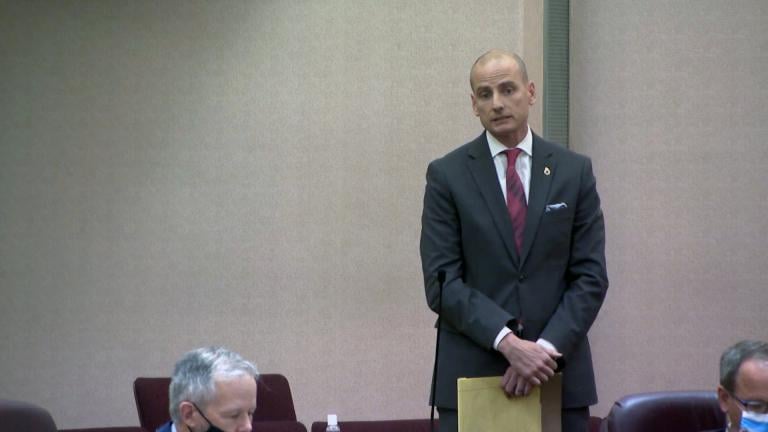
Mary Richardson-Lowry, corporation counsel for the city of Chicago and leader of the city’s Law Department, told WTTW News’ “Chicago Tonight” on Thursday that her office didn’t obstruct any probes.
“It just wasn’t factual,” Richardson-Lowry said. “That was a mischaracterization, but I view it as an attempt to lift the issue to further evolutions in ethics reform. This structure gets us to a place where we don’t erode our obligations as lawyers, nor do we have an adverse impact on the Office of Inspector General — who’s also my client — and their ability to do their job.”
The new rules also come after long negotiations with Witzburg and the city’s Law Department to hammer out a version both groups agree with.
Since 1969, 38 alderpeople have been convicted on corruption charges — something Witzburg said creates a deficit of legitimacy for the city. Other local elected officials have said that the cases of Madigan and Burke were a missed opportunity for Chicago to fully tackle its ethics concerns.
Witzburg on Thursday announced she won’t be seeking a second term, saying that it’s important to keep the job independent. Richardson-Lowry said she hopes Witzburg’s successor embodies the new ethics standards.
“They will arrive with these guidelines in place; they will arrive with professional standards in place,” Richardson-Lowry said. “What we hope to see first is somebody who’s ethical and willing to apply that ethics as they go about their job. They’re a client; we’re there to guide them, give legal support but to the extent that they fail to meet their obligation, then we have to address that as well.”
Local leaders aren’t the only ones on the hook. The push for reform coincides with mounting police misconduct costs. The City Council on Wednesday agreed to pay $35.2 million in settlements for police misconduct cases. The city has already far exceeded its $82 million annual budget for such settlements, with additional funding sources uncertain. And with the Chicago Police Department in compliance with just 16% of its consent decree after six years, there isn’t much to relieve concerns that the city’s reform efforts are too slow and costly.
Richardson-Lowry has taken an aggressive approach to resolving some of these cases, a move she said is more fiscally responsible in the long term.
“It costs the city an extra $100,000 on average for certain categories of cases for each year that the can is kicked down the road,” Richardson-Lowry said. “It’s certainly not my approach. We must meet it head-on. Yes, it is true that there are more of them and, yes, it is true that it costs more to do that in the short run. But it is also true that the savings are significant in the long run. So we’re on that course. We will continue to look for opportunities to settle. We try cases where we must. What it means for the taxpayer is they benefit in the end because in the long term we’re not spending as much of the city’s resources.”
There’s also growing pressure nationally as President Donald Trump targets Chicago with multiple lawsuits.
Richardson-Lowry said her office has had to shift priorities to address Trump’s focus on Chicago by responding to many court filings related to federal legal battles on issues such as the city’s policies protecting immigrants.
“We have filed probably just under 40 cases related to this administration,” Richardson-Lowry said. “What that means is terrorism dollars. Since February, we haven’t had any reimbursements for things that help us address terrorism in the third largest city in the country. That matters to the citizen. So we filed. And just after filing, we were joined by other cities — Denver, San Francisco, etc. Shortly thereafter, suddenly the funds were released. If that is the path that we need to travel to ensure the funds are released, the citizens have the protections that we need and the resources so that the mayor can go about implementing his obligations, that is what we will do.”
Related Stories